Reading an object
A vessel has more than one material story
A smooth surface can conceal a very different material underneath. Separating body, coating and decoration makes a ceramic object easier to describe without guessing how it was made.
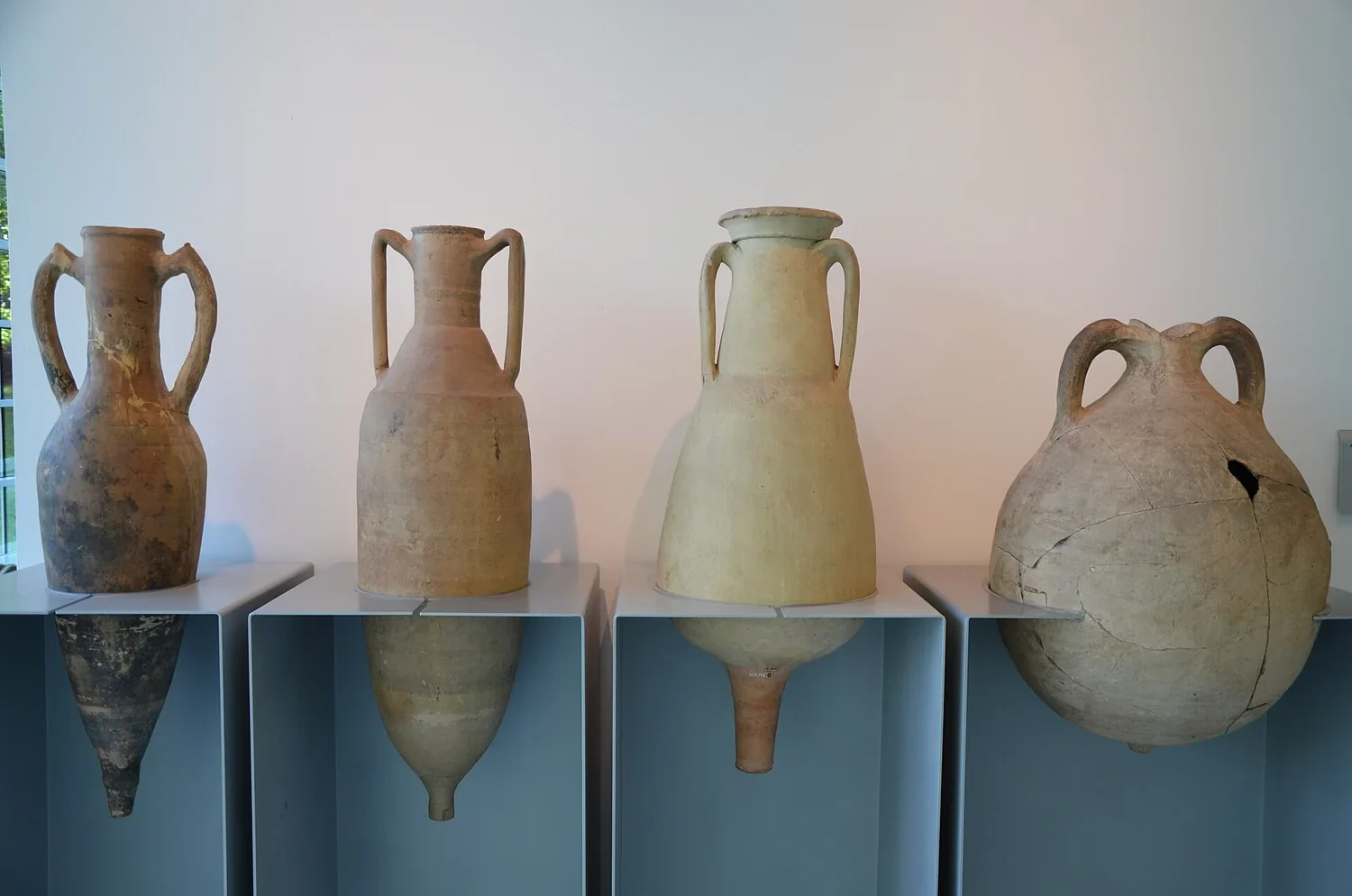
Start below the shine
Ceramics begin with clay and other ingredients that are changed by firing. A glaze is a separate surface layer, even when the finished object feels like one continuous material. The Canadian Conservation Institute explains that composition and manufacture affect how robust a ceramic is. The useful first distinction is therefore not expensive versus ordinary, but the relationship between a body and its surface.
Read visible evidence
An unglazed foot, an exposed edge or a documented cross-section can help a reader distinguish body colour from decoration. Look rather than scratch: a small mark made to satisfy curiosity is still damage. A catalogue description may identify a body or glaze more precisely than a photograph can. Colour alone is not a reliable identification test, and a glossy surface is not proof of a particular firing temperature.
Turn observation into a record
Write a short description in separate fields: shape, body where visible, coating, decoration and condition. Then add a second line for the information supplied by a museum catalogue. This keeps what you can see distinct from what the maker or cataloguer tells you. A gap between those two records is a useful research question, not a reason to invent a production history.
Read the primary sources
The explanation above is independently written. Sources support the factual foundations; examples and learning prompts are this publication’s own.